Sandesh Adhikari · Ph.D. researcher, UT Arlington

When you can’t protect everything, how do you choose?

I build the mathematics and the software that answer that question for systems too large to reason about by hand.

I simulate what could go wrong, teach fast models to stand in for slow ones, and write optimizers that decide where limited money does the most good. I learned it on roads and pipelines facing earthquakes and floods.

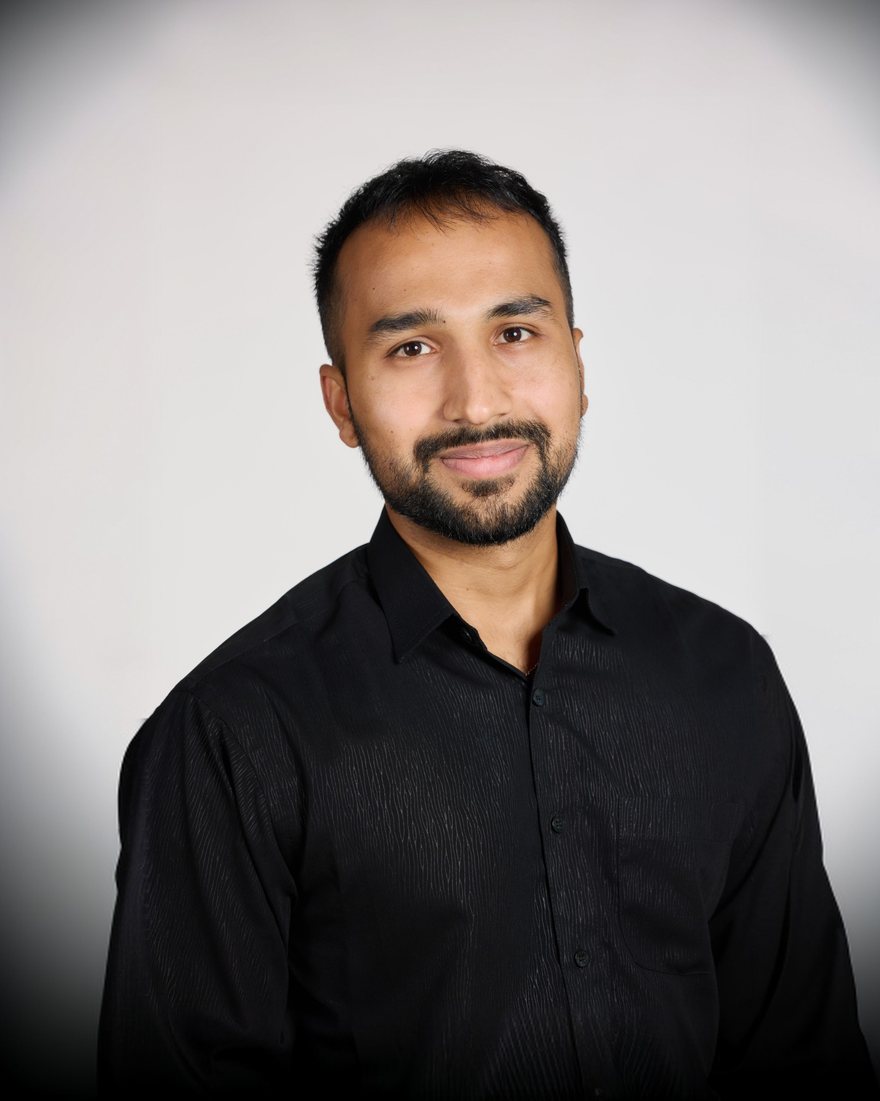
Portrait of Sandesh Adhikari
Arlington, Texas

Who I am

An engineer who writes the code, and a programmer who has tested concrete by hand.

I studied civil engineering in Nepal, where earthquakes are not hypothetical. Today I work on the question that follows from that: with limited money and an uncertain future, where does protection matter most?

My answer is computational. I build simulations that play out thousands of possible futures, statistical models that learn to imitate slow physics in milliseconds, and optimizers that search through more options than anyone could list. I worked as a software developer before the Ph.D., so I build these tools end to end and I care whether they run fast.

Infrastructure is where I learned this. The shape of the problem is the same wherever capital meets risk: too many choices, incomplete information, and a real cost to being wrong. That is the work I want to keep doing.

Away from the keyboard: hiking, camping, running and the gym. I rarely turn down something I have not tried before.

Now
Ph.D. student and graduate research assistant, Civil Engineering, The University of Texas at Arlington
Project
Currently working on a U.S. Department of Transportation (USDOT) project on the risk and resilience of road networks
Strengths
Optimization, stochastic simulation, statistical modeling, scientific programming
Speaks
English, Nepali, Hindi
Based
Arlington, Texas

What I bring

I model uncertainty honestly

I build Monte Carlo simulations that carry randomness from the cause all the way to the outcome, and I check that an estimate has settled before I trust it.

Same skill elsewhereScenario generation, risk estimation, valuation by simulation

  • Monte Carlo
  • Uncertainty quantification
  • Time series

I make slow models fast

When one evaluation takes hours, I train a statistical stand-in that answers in milliseconds and reports how sure it is, then spend real computation only where it changes the answer.

Same skill elsewhereCalibrating expensive models, searching strategy and parameter spaces

  • Gaussian processes
  • Bayesian optimization
  • Experimental design

I optimize hard decisions

Thousands of yes-or-no choices, objectives that pull against each other, a budget that never stretches. I use evolutionary search when the problem is a black box and integer programming when it can be solved exactly.

Same skill elsewhereEfficient frontiers, constrained allocation, scheduling

  • Multi-objective search
  • Integer programming
  • Genetic algorithms

I see systems, not parts

Roads, pipes and supply chains fail as networks. I use graph theory to find the few links everything else depends on, and to shrink a search before it starts.

Same skill elsewhereDependency and contagion structure, supply and transport networks

  • Graph theory
  • Community detection
  • Centrality

I write the software

I shipped production code before I did research: a .NET and PostgreSQL system used to plan road maintenance budgets in Nepal. Now I build research pipelines that chain several simulators together.

LanguagesPython, MATLAB, C, C#, SQL, JavaScript

  • Scientific computing
  • Simulation pipelines
  • Databases

I explain it to people who have to act

I have presented research at an ASCE conference, co-authored an open textbook, and been part of a team that delivered hands-on safety training to disaster-recovery workers. A result nobody understands does not get used.

In practiceA conference talk, papers, a book, hands-on training

  • Technical writing
  • Presenting
  • Training

Track 01 · The problem

You can reinforce six links. The earthquake has not picked a spot yet.

This is the decision I work on, shrunk to fit a screen. Every city, utility and fund faces a version of it: more to protect than money to protect it, and a future that only arrives as probabilities.

6 of 6 reinforcements left


Neighborhoods still supplied, on average

No reinforcement –
Your plan –
Optimizer –

  • Neighborhood
  • Supply
  • Likelier to fail
  • Broken
  • Your reinforcement
  • Optimizer’s

Why the real thing is hard

01

The future is a distribution

Nobody knows which earthquake arrives. A plan has to hold up across thousands of possible ones, so it is judged on a whole range of outcomes and never on one forecast.

02

The options explode

The toy above has millions of ways to choose six links. A real network with 300 pipes has more possible plans than there are atoms in the observable universe.

03

Every answer is expensive

On a real system, scoring one plan means running physics: pressure in every pipe, or traffic on every road. A single run can take minutes to hours, and a search needs thousands.

Track 01 · How I attack it

Three moves, in this order.

  1. Simulate

    Play out the uncertainty. Thousands of possible events, each one damaging the system in a different way.

  2. Approximate

    Train a fast statistical model to stand in for the slow simulator, one that also knows where it is guessing.

  3. Optimize

    Search with the fast model in the loop, and spend real simulations only where they could change the decision.

Why not just train a machine learning model?

It is the first thing people suggest. For this problem it is the wrong tool on its own, for three reasons.

01

There is almost no data to learn from

Machine learning needs many examples. Here the earthquake has not happened yet, so every example has to be simulated, and one simulation can take hours. That buys a few hundred examples, far fewer than a large model needs.

02

It has to know when it is guessing

An optimizer hunts for unusual plans, which is exactly where a trained model has seen nothing. Most models answer confidently anyway. I need one that reports its own uncertainty, so I know where the next simulation is worth paying for.

03

A prediction is not a decision

Predicting the damage for one plan does not say which plan to choose out of millions. And a black box cannot be handed to an exact solver, or explained to the people spending public money. A simple model with a known form can do both.

Where plenty of real data exists, machine learning is the right tool. I have used it there, in co-authored work on predicting how long highway construction projects will take.

What I use instead

Live · move two

A model that knows what it does not know

  • Model’s estimate
  • Its uncertainty
  • The truth
  • Simulated
  • Next sample


Each dot is one costly simulation. The model chooses the next one itself, where it expects the largest improvement, and finds the lowest point of a curve it has never fully seen.
Live · move three

No single best answer, only the best trade-offs

  • Best trade-offs
  • Beaten on both counts
  • Earlier fronts


Protect against earthquakes and you neglect floods, and the reverse. An evolutionary search finds the whole menu of defensible compromises, which is the same object as an efficient frontier.

Track 01 · The work

Where I have put it to work.

One first-author paper is in press and listed in full. The others are in peer review, so they appear in outline only. The road-network research is part of the U.S. Department of Transportation project I am working on now.

In press

What a decade of research says about earthquakes and pipelines

A systematic review of 183 studies on seismic risk to water and gas pipeline networks, mapping what the field has solved and what it has not: gas systems, secondary hazards such as liquefaction, fire after earthquakes, and decisions made in real time.

Bibliometric analysis · systematic review
First author · Journal of Pipeline Systems Engineering and Practice

In review

Roads that face more than one hazard

Planning repairs for a city road network that has to survive both earthquakes and floods, when the best plan for one is a poor plan for the other.

Multi-objective optimization · surrogate modeling
First author · USDOT project

In review

Water networks after an earthquake

Deciding where a utility should add shut-off valves, so that a broken main closes a street and not a district.

Stochastic optimization · network analysis
First author

In review

Exact answers in place of long searches

Recasting a simulation-driven search as a mathematical program that can be solved to proven optimality in a fraction of the time.

Statistical learning · integer programming
First author

Published

  1. In press

    Seismic Risk Assessment of Water and Gas Pipeline Networks: Bibliometric Analysis and Systematic Review

    S. Adhikari, S. Sharveen, A. Roy, M. Shahandashti

    Journal of Pipeline Systems Engineering and Practice, ASCE, forthcoming · doi:10.1061/JPSEA2/PSENG-2147

  2. 2026

    A Machine Learning-Based Framework for Predicting Project Duration during the Planning Phase of Highway Construction Projects

    S. Bhatta, S. Acharya, A. Roy, S. Adhikari, M. Shahandashti

    International Conference on Transportation and Development 2026, ASCE, pp. 12–23

  3. 2025

    Assessing the Impact of Network Topology on Seismic Resilience in Gas Pipeline Networks

    S. Sharveen, S. Adhikari, A. Roy, M. Shahandashti

    Pipelines 2025: Planning and Design, ASCE, Vol. 3, pp. 361–371 · doi:10.1061/9780784486382.039

  4. 2025

    Designing a Sustainable Multi-Objective Mixed-Integer Linear Programming (MILP) Model for Shrimp Supply Chains

    M. A. H. Abadi, K. Saraswat, S. Adhikari, S. More, M. Ghasempour, E. C. Jones Jr.

    IISE Annual Conference Proceedings, pp. 1–6

  5. Book

    Safety and Resilience in Disaster Debris Removal and Clean-Up Operations: A Field and Training Guide for Resilience Workers

    M. Shahandashti, A. Roy, Z. Yin, A. Balderrama, S. Adhikari, S. Acharya

    Mavs Open Press, Arlington, Texas · open access

Languages

  • Python
  • MATLAB
  • C
  • C#
  • SQL
  • JavaScript

Simulation

  • WNTR
  • SUMO
  • OpenSHA
  • ArcGIS Pro

Engineering

  • ETABS
  • SAP2000
  • AutoCAD
  • Civil 3D

Data, web, writing

  • PostgreSQL
  • ASP.NET
  • LaTeX

Google Scholar profile →

Talks and training

Out of the lab.

Research gets better when it leaves the building. Two recent occasions when mine did.

2025 · Tampa, Florida

Presenting at the ASCE UESI Pipelines Conference

I presented our paper on gas pipeline networks and earthquakes. The short version: looped networks generally hold up better after an earthquake than tree-like ones, where one damaged link can cut off everything beyond it.

Read the post on LinkedIn →
August 2026 · Austin, Texas

NHERI SPARC at the Texas Advanced Computing Center

Three days of hands-on computational training alongside other early-career natural-hazards researchers: high-performance computing, uncertainty quantification, AI and scalable workflows, taught by people from DesignSafe, the NHERI SimCenter, NHERI RAPID and TACC.

Read the post on LinkedIn →

Track 02

Civil engineering

Before I modeled infrastructure, I tested it by hand: rebound hammers, ultrasonic pulses and ground-penetrating radar on a tower in Kathmandu. This is the engineering that keeps the models honest.

  A 17-storey building model responding to an earthquake: three vibration modes, 5% damping, sway exaggerated. A nod to my final-year project, the earthquake-resistant design of a 17-storey building.

Education

In progress

Ph.D., Civil Engineering

The University of Texas at Arlington

Graduate research assistant at the North Texas Initiative for Resilient Infrastructure, working on the resilience of transportation and pipeline networks. Currently on a U.S. Department of Transportation project on road networks.

2018 – 2023

B.E., Civil Engineering

Tribhuvan University, Institute of Engineering, Pulchowk Campus

Full four-year merit scholarship. Elective in Time Series Analysis.

Coursework and design projects

2022 – 2023

Earthquake-resistant design of a 17-storey multipurpose building

Final-year project

Structural analysis and seismic design of a high-rise building.

  • Structural design
  • Seismic analysis
2023

Synthetic streamflow generation, Sinja Khola at Diware

Time Series Analysis elective

Stochastic generation of river flow sequences from a historical record.

  • Time series
  • Hydrology
2018

Database management system in C

Programming coursework

Field and professional practice

FY 2025

Worker safety in disaster debris removal

U.S. Department of Labor Susan Harwood Training Grant · UT Arlington

Part of the team that delivered hands-on, bilingual safety training to resilience workers, and co-author of the twelve-chapter open textbook that grew out of it.

  • Construction safety
  • Training delivery
  • Technical writing
2023 – 2024

Civil Engineer and Software Developer

SOFTWEL (P) Ltd., Kathmandu

Building design and surveys for lift and canal irrigation, alongside engineering software on ASP.NET. Contributed to the web system Nepal's Department of Roads uses to track road conditions and plan annual maintenance budgets, and managed its PostgreSQL database.

  • Building design
  • Irrigation survey
  • C#
  • PostgreSQL
2022 – 2023

Structural condition assessment, Kathmandu View Tower

Research and Training Unit, Pulchowk Campus · for Kathmandu Metropolitan City

Non-destructive evaluation of construction quality: rebound hammer, ultrasonic pulse velocity, rebar location, ground-penetrating radar, ultrasonic tomography and as-built survey, followed by data interpretation.

  • NDT
  • GPR
  • Ultrasonic testing

Recognition and service

2023

Program coordinator, inter-college model competition

ADHAAR-2079, Pulchowk Campus

2023

Earthquake education campaign

With KTM Geo Lab, in public schools across the Kathmandu Valley

2021

Winner, intra-college model competition

Ecological applications of pervious concrete

Contact

Have a decision too big to reason through by hand?

I am always glad to talk about hard problems, new opportunities and research collaborations.

sandeshadhikari34@gmail.com